One of my best — and worst outdoor experiences — was a winter day in Yosemite.
A friend told me wilderness skiing in the Sierra was a great workout and an opportunity to experience pristine stillness.
Not exactly.
We headed to the Badger Pass Ski Area, the farthest point you can travel on Glacier Point Road in Yosemite when it closes due to snow.
Long story short, it was awkward and exhausting.
I managed to hit my share of snow pockets given we weren’t on groomed trails. Snow pockets are just what they imply — snow above a pocket of air. They are not fun to step on and then into.
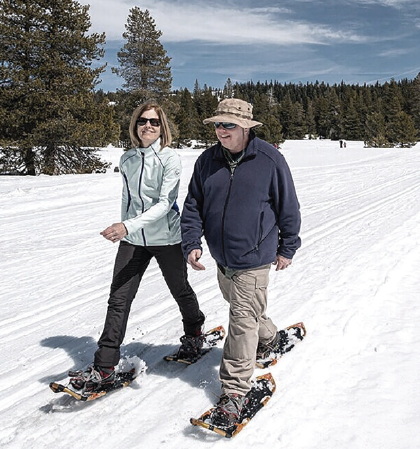
My first — and admittedly limited — experience using snowshoes was at Lake Tahoe.
I was inspired to do so because I wanted a chance to repeat the honest-to-goodness natural high of standing in the middle of a snow shrouded Sierra forest so still you can hear yourself think.
I discovered snowshoeing was a heck of a lot easier and more pleasant. It was almost as easy as walking on a hiking trail in the summer.
This is a preamble to what could be your best outdoors winter experience of the winter.
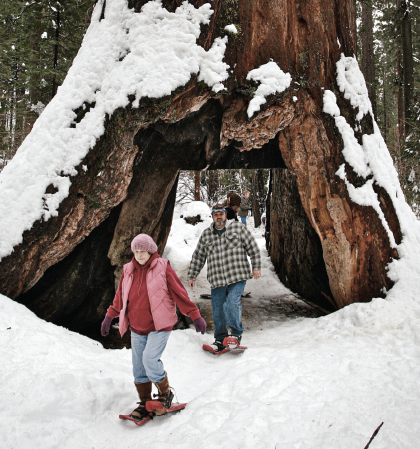
It’s snowshoeing at Calaveras Big Trees State Park at just below the 5,000 foot level.
Every Saturday in the winter, weather permitting, the non-profit California Big Trees Association conducts free Saturday snowshoe tours.
They even offer up to 30 pairs of snowshoes at no charge for guests to use. You can also bring your own by renting them elsewhere.
The snowshoe hike typically covers 1.7 miles round trip on trails and takes up to several hours.
They are led by guides.
The route varies based on conditions but typically includes a swath of the North Grove with its 100 or so giant sequoias.
There is a $10 vehicle entrance fee.
For more information, go to the Calaveras Big Trees Association website at bigtrees.org.
It’s there that you will find Bear Valley Adventures.
It offers not just snowshoe and snow pole rentals if you lack them, but there are 38 trails of groomed trails on 3,000 acres compete with three warming huts. There are also three trails designed for kids.
There are day passes and, if you get hooked, season passes. They also sell snowshoes.
You can also cross country ski at Bear Valley Adventures Company.
More information can be found at bvadventures.com.
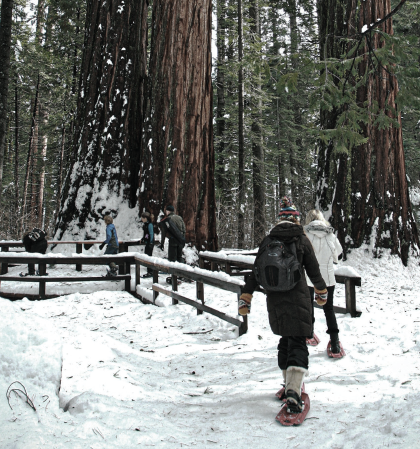
In a sense, much of the 1,189 square miles in the park can be a winter playground for snowshoeing.
The closest, when snow is on the ground, is the Crane Flat area where there are trails leading to two groves of giant sequoias — the Tuolumne Grove and Merced Grove that have trails just 20 or so minutes past the Big Flat Oak entrance.
But if you need rentals and are a beginner, head to Yosemite’s Badger Pass Ski Area.
There are not trails per se, but there is the Glacier Point Road.
Covered in snow, it is clearly a path to the point with its world class views.
But with 10 miles to cover, you’re likely not going to make it up and back. It is, however, a good place to break into using snowshoes with short off road excursions into the woods.
Snow poles aren’t essential on the snow-covered road but they do help.
My “off-road” experience at Glacier Point was much easier with snow poles given there is not a solid base that a paved road provides.
It goes without staying sturdy shoes — boots preferably — that are waterproof is a must as are gloves, warm clothing and socks plus much of what you’d take on a normal hike such as water and even a head lamp.
Even though snowshoeing is less demanding than wilderness skiing, you can become dehydrated before you know it.