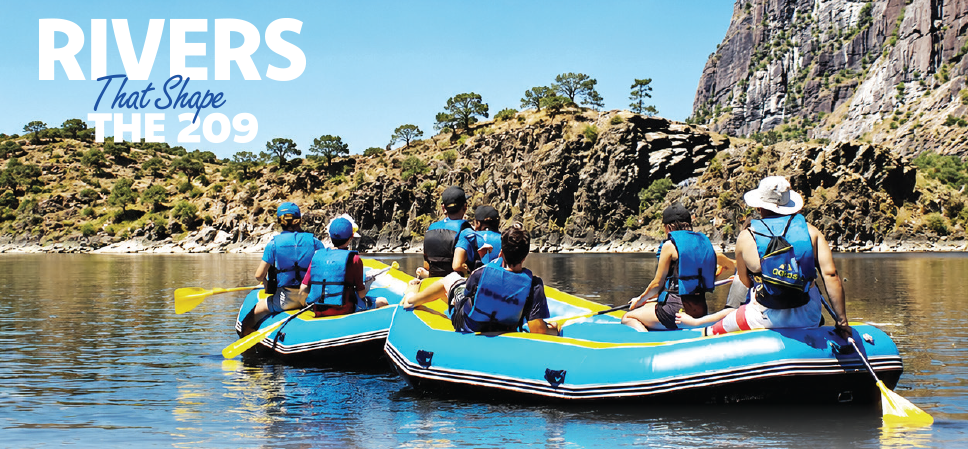
When people picture the 209, they often think of orchards, dairy roads, small towns, summer heat and the long golden stretch of the Central Valley. But beyond the almond rows and foothill highways is another side of the region — one powered by cold mountain water, volcanic bluffs, historic bridges and rafts bouncing through sunlit rapids.
For people in Stanislaus and Merced counties, rafting is not a far-off vacation postcard. It is a day trip, a first-time adventure and, for experienced paddlers, a whitewater challenge close to home. The 209 sits near the Sierra Nevada, giving residents access to some of California’s most scenic river routes while staying rooted in the heart of the valley.
The Stanislaus River at Knights Ferry is often the entry point for beginners. The popular Knights Ferry-to-Orange Blossom stretch runs about seven miles with Class I and II rapids, making it one of Northern California’s most approachable rafting routes. The float passes volcanic bluffs, rolling foothills and quiet stretches that feel far removed from daily traffic.
The route’s popularity comes from its balance of adventure and accessibility. Sunshine Rafting Adventures and River Journey operate self-guided trips that include rafts, paddles, life jackets and shuttle service. Trips usually take between 3.5 and 5 hours, depending on river flow and group pace.
But the Stanislaus is still a river, not a swimming pool. Flow levels matter. Sunshine Rafting says summer flows between 200 and 749 cubic feet per second are generally suitable for beginners. Higher flows require stronger paddlers and better communication, especially for families with children.
For many residents, Knights Ferry becomes the first chapter in a rafting story — the place where sunscreen, water shoes and a cooler turn into a full day of memories. The area also offers walking trails, picnic spots and views near one of the region’s most recognizable covered bridges.
For those seeking more intensity, the Merced River delivers. Fed by Yosemite snowmelt, the Merced is one of California’s premier spring and early-summer rafting rivers. Rafters encounter Class III and IV rapids, canyon scenery, campgrounds and hiking trails along the Merced Wild and Scenic River.
The Merced is central to Merced County’s identity. It gives the county its name, shapes its landscape and connects the valley floor to Yosemite’s granite walls. For local residents, a Merced trip can feel like following the county’s namesake upstream until it transforms from quiet valley water into roaring whitewater.
Commercial outfitters such as Zephyr Whitewater Rafting and OARS offer trips ranging from half-day runs to longer full-day adventures. Because the river depends on snowmelt, the season typically runs from late April through June, sometimes extending into July depending on snowfall.
The Merced is a strong fit for adventurous first-timers, teens and adults who want real whitewater without immediately stepping into the demands of the Tuolumne River. Spring wildflowers, canyon walls and cold, clear water add to the experience. But snowmelt-driven rivers can shift quickly, and a calm stretch one week can feel much more powerful the next.
The Tuolumne River — known simply as “The T” — is the region’s heavyweight. For serious rafters, it is one of California’s signature whitewater runs. The Main Tuolumne features challenging Class IV+ rapids packed into an 18-mile stretch through steep canyon scenery.
Commercial outfitters such as ARTA and Sierra Mac run trips near Groveland and the Highway 120 corridor. Guides describe the Tuolumne as remote, demanding and packed with nonstop rapids. Clavey Falls, one of the river’s largest rapids, is well known among experienced paddlers.
Cherry Creek — the Upper Tuolumne — is the pinnacle. Outfitters describe it as an intense Class V run requiring training, experience and close attention to guide instructions. This is not a casual float. It is a river that demands respect.
For families wanting something calmer but still iconic, Yosemite Valley offers seasonal rafting on the Merced River during the summer months. Depending on water levels, visitors can float through one of the most recognizable landscapes in California while enjoying a gentler experience.
The right rafting trip depends on the group. Families with young children and first-timers will likely feel most comfortable at Knights Ferry. Adventurous beginners may enjoy a guided Merced trip. Experienced paddlers may look toward the Main Tuolumne, while Cherry Creek is best reserved for those prepared for advanced whitewater.
Rafting also comes with responsibility. Local rivers are beautiful but not amusement rides. Cold water, changing flows, submerged branches, private property and shuttle logistics all matter. The best rafters plan ahead, listen to guides, wear life jackets and leave the river cleaner than they found it.
For the 209, rafting is more than recreation. It is a reminder that the valley is connected to something wild. The same water that rushes through Yosemite, rolls past foothill towns and supports the agricultural life of the Central Valley also gives families a chance to paddle, splash and see home from a different angle.
This summer, the adventure may be closer than many residents realize. It might be waiting in Knights Ferry with a picnic lunch. It might be roaring through the Merced River Canyon. It might be thundering down the Tuolumne for those ready to meet the river on its own terms.
Either way, the 209 has a river story to tell. All that is left is to grab a paddle and listen.