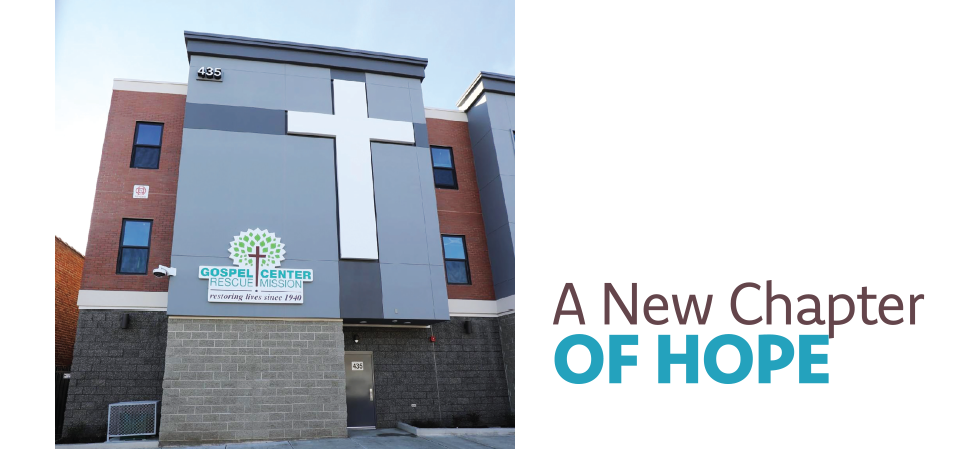
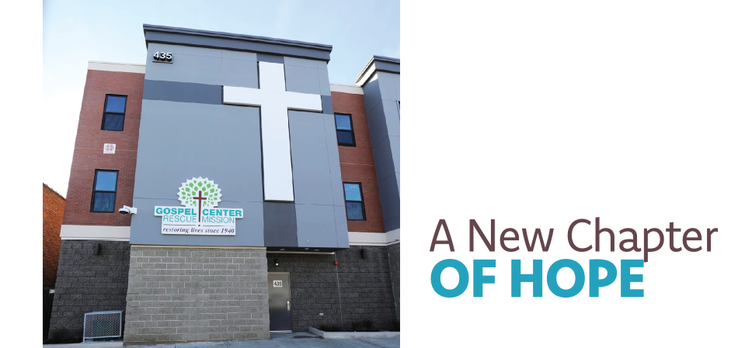
The newest building on the Gospel Center Rescue Mission campus rises three stories above South San Joaquin Street, but its true impact is measured in something far deeper than square footage. With the opening of the New Life Program Multi‑Purpose Center, the Mission has expanded not only its physical footprint but its capacity to stabilize lives, restore dignity and offer a path forward for people experiencing homelessness in San Joaquin County.
The 110‑bed, 14,577‑square‑foot facility is now fully in use, marking a major milestone for an organization that has served Stockton for more than 86 years. Designed and built by Diede Construction of Lodi, the center was created to meet the growing need for safe, structured residential treatment and recuperative care. Inside, the building feels purposeful and human‑scaled: dorm rooms with one to four beds, bright shower and laundry areas, a classroom for life‑skills and recovery programming, and dedicated space for the Mission’s expanding Recuperative Care Program.
For CEO David L. Midura, the building represents years of planning, partnership and prayer. “Above all, we give thanks to our Lord Jesus Christ, whose provision and guidance made this work possible,” he said. “We are deeply grateful to everyone who contributed through their prayers, generosity, and support.”
The New Life Program is the heart of the Mission’s residential addiction‑treatment work, offering two six‑month phases followed by a one‑year bridge‑housing program. The new center allows the Mission to serve more people at once and provide a more stable environment for long‑term recovery. It also strengthens the Mission’s role as the county’s first provider of recuperative care—an increasingly critical service for individuals who are discharged from hospitals but have no safe place to heal.
That component of the project was made possible through a major partnership with Health Plan of San Joaquin, which invested $6.5 million to support individuals experiencing homelessness who have significant medical needs. San Joaquin County contributed an additional $3.5 million, a decision Board of Supervisors Chair Paul Canepa described as both compassionate and practical.
“It is an investment in people and it reflects smart governance,” Canepa said when the final round of funding was approved. “When we help people stabilize their lives, we reduce the long‑term costs of homelessness on healthcare, law enforcement and the justice system. This is how we create safer neighborhoods and stronger communities.”
Additional support came from the Federal Home Loan Bank, the City of Stockton, and a long list of private donors, including Fritz and Phyllis Grupe and the Grupe Country Fair sponsors. Their contributions helped transform the Mission’s vision into a modern, functional space designed for healing.
The building’s opening also signals a shift in how Stockton approaches homelessness—one that blends emergency shelter with long‑term recovery, medical care and structured support. As the oldest operating low‑barrier shelter in the county, the Mission has long been a safety net for people with nowhere else to go. The new center strengthens that role, offering stability at a time when the region continues to grapple with rising homelessness and limited treatment options.
Inside the New Life Program Multi‑Purpose Center, the hum of daily activity—classes, counseling sessions, laundry cycles, quiet moments of rest—reflects the Mission’s belief that recovery is built through routine, community and compassion. For the men and women who will pass through its doors, the building is more than a shelter. It is a place to begin again.
As the Mission settles into this new chapter, the question becomes how the expanded capacity will shape the lives of the people it serves—and how Stockton’s broader community will continue supporting efforts that offer both safety and second chances.