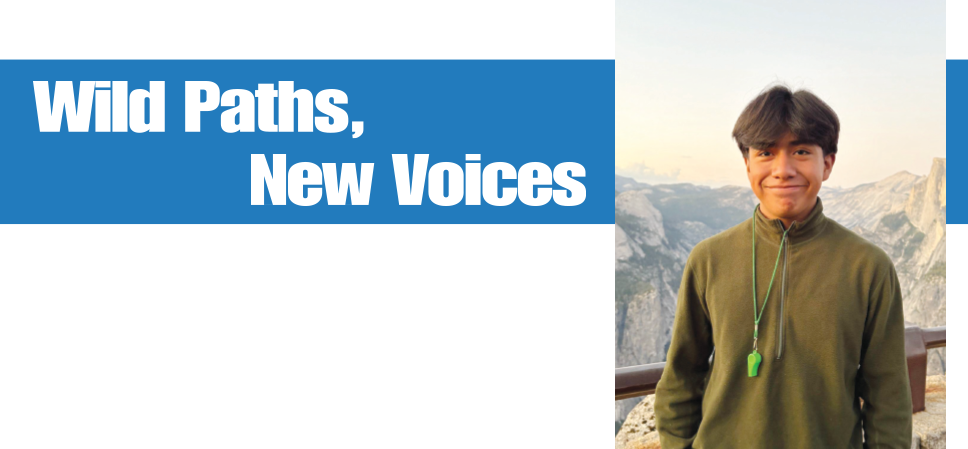
When Vicente Madrigal pushed his kayak into the slow‑moving water of the San Joaquin River Parkway two years ago, he thought he was signing up for a simple adventure. He was a Firebaugh High School freshman then, more interested in getting outside than in discovering anything about himself. But that first trip with Adventure Risk Challenge — known widely as ARC — marked the beginning of a transformation he never expected.
Today, as a junior, Madrigal speaks with a clarity and confidence that once felt out of reach. He has completed ARC’s Rising Community Leaders cohort, the 11‑day Stepping Stone Course in Yosemite National Park, and most recently, the program’s intensive 34‑day Immersive Course. Each step, he said, pushed him further from the comfort zones he once clung to.
In his application for the Immersive Course, Madrigal admitted he feared the writing requirements more than the physical challenges. “I think the biggest challenge, honestly, will be the essay,” he wrote. “I am not good at writing essays. I know I will get it done but, I know I will struggle.” He also shared a dream he had rarely spoken aloud: becoming a forest ranger.
“I think ARC will help me with this by improving my communication skills,” he wrote. “Which are much needed, and I struggle with communicating anything. I think ARC will help with this by pushing me out of my comfort zone.”
By the end of the summer, Madrigal had written an essay that surprised even him — a reflection on leadership, vulnerability and the kind of person he hopes to become. “When I came to ARC I didn’t know what kind of leader I was,” he wrote. “I didn’t know I was a leader at all. But over the last 34 days I’ve learned that I am. I am a leader who listens quietly. I’m a leader who is helpful and who asks for help. I’m a leader who is forgiving and asks for forgiveness.”
For ARC staff, stories like Madrigal’s are the heart of the program.
Adventure Risk Challenge is more than an outdoor program. It is a long‑term, relationship‑driven model that blends literacy development, leadership training and wilderness experiences for high school students who may not otherwise have access to them. The program operates year‑round in the Central Valley and the Tahoe region, offering everything from backpacking and rock climbing to public‑speaking workshops and reflective writing.
“Over the past 10 years that I have worked with ARC, I’ve been amazed by the personal and academic growth demonstrated by the students who participate,” said Jesus Alejandre, ARC’s Central Valley program manager. “It has been inspiring to watch as they have gone on to attend elite colleges, become leaders in their communities, and advocate for protecting the natural environment.”
Alejandre said the program’s strength lies in its dual focus: outdoor challenge and academic skill‑building. Students learn to navigate with topographical maps, cook in the backcountry and work as a team — but they also write essays, deliver speeches and reflect on their personal values. The combination, he said, builds confidence that lasts long after the summer ends.
ARC’s curriculum is intentionally designed to help students develop positive identity, social competencies and a commitment to learning. These developmental assets are measured through the Developmental Assets Profile, where participants consistently show meaningful improvement.
Since its founding in 2004, more than 400 students have graduated from ARC’s summer programs and more than 4,000 have participated in its year‑round offerings. In the Central Valley, ARC has provided summer course opportunities since 2009, creating a pipeline of young leaders who return to their schools and communities with new skills and a stronger sense of purpose.
For many students, ARC offers their first experience in the Sierra Nevada. The program’s summer courses — including the 34‑day Immersive Course — take place in Yosemite National Park, where students spend weeks hiking, journaling, learning and living together.
The setting is intentional. ARC leaders say the wilderness provides a backdrop that encourages resilience, curiosity and self‑discovery. Away from the pressures of school, work and family responsibilities, students have space to reflect on who they are and who they want to become.
Madrigal said the long days in Yosemite helped him understand the values that now guide his life: genuineness, adventure and health. He learned to trust himself, to speak up when he needed help and to support others when they struggled. He also learned that leadership does not always look like being the loudest voice in the room.
“I’m a leader who listens quietly,” he wrote in his final essay — a line that ARC staff say captures the kind of growth they hope every student experiences.
Opening doors for 2026
ARC is now accepting applications for its 2026 summer programs, with courses again scheduled in Yosemite. All current California high school students are eligible to apply. The program operates on a sliding scale based on family income, and most students pay just $1 per day to participate. The true value of each course — between $5,000 and $10,000 per student — is covered through scholarships funded by public and private foundations, grants and individual donors.
For Alejandre and the ARC team, expanding access is a priority. “We’re excited to welcome a new group of participants to this transformational summer program,” he said. “ARC supports students’ social and academic development in ways that stay with them for years.”
Applications are open until April 24. More information, including how to apply or donate, is available at adventureriskchallenge.org.
As for Madrigal, he is already thinking ahead. He still hopes to become a forest ranger, and he still sees ARC as the place that helped him believe that dream is possible. But more than anything, he said, he wants to keep growing — and to keep choosing the harder path when it leads somewhere meaningful.
“I will use my leadership in my life,” he wrote, “by listening to my friends and their needs and making sure they always feel supported.”